





Tokenizing Real Estate in Berlin: Cracking the Code of Urban Ownership
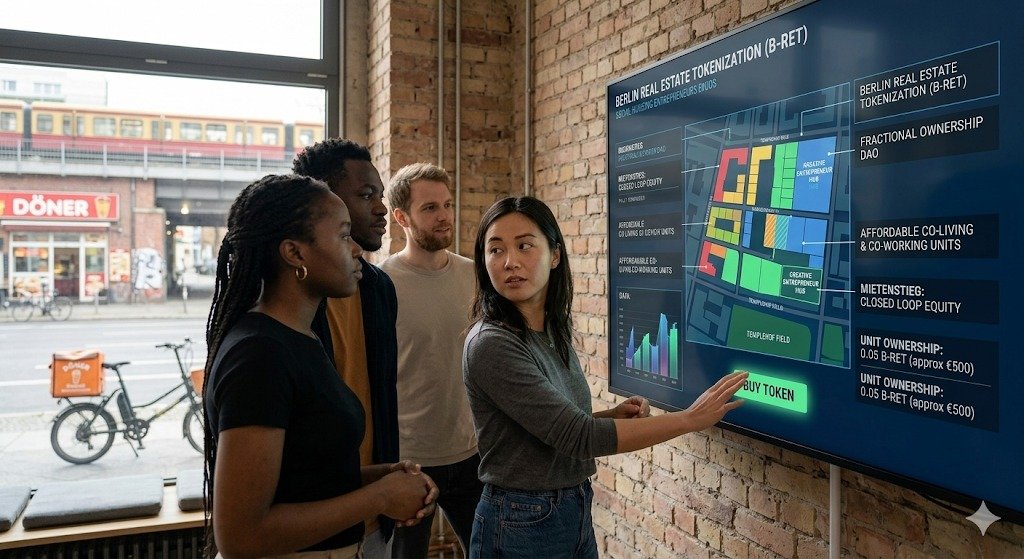
How blockchain is finally solving the affordable housing crisis for young entrepreneurs.
Berlin, long the creative heart of Europe, has faced a defining crisis in the 2020s: the disappearance of affordable living and working spaces. As gentrification pushed young entrepreneurs to the outskirts, a technological solution emerged in 2026 that is fundamentally rewriting the rules of property: Real Estate Tokenization.
The Fractional Revolution
Traditionally, investing in Berlin real estate required millions in capital and a labyrinth of German bureaucracy (Notar). Today, blockchain platforms are allowing property owners to “tokenize” buildings—dividing ownership into digital tokens that can be purchased for as little as €500. This shift is not just for investors; it is a lifeline for young founders. By using “Co-ownership Tokens,” startups are collectively buying their office buildings, shielding themselves from the predatory rent hikes that previously forced many out of Mitte and Kreuzberg.
Why Berlin?
The city’s unique political climate, which has vacillated between rent caps and corporate buyouts, proved to be the perfect incubator for decentralized finance (DeFi). The EU’s MiCA (Markets in Crypto-Assets) regulation, fully matured by 2026, has provided the legal framework that institutional investors needed. We are seeing “Social Housing DAOs” (Decentralized Autonomous Organizations) where residents own a stake in their own apartment blocks, ensuring that the wealth generated by rising property values stays with the community rather than flowing to offshore funds.
The Entrepreneur’s Takeaway
For the modern founder, the “rent vs. buy” debate is dead. The new strategy is “Tokenize and Thrive.” By fractionalizing the equity in their commercial spaces, entrepreneurs can raise capital without taking on high-interest bank loans, while simultaneously building an asset class that grows alongside their business.