



LVMH & The Middle East: Bernard Arnault’s Geopolitical Warning
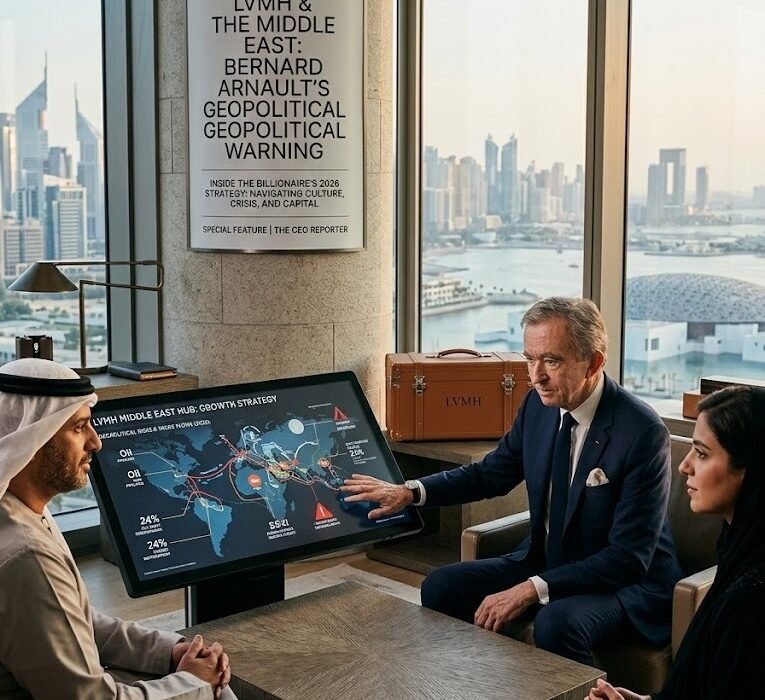
Why the “King of Luxury” is bracing for a shift in the global economic order.
Bernard Arnault, the chairman of LVMH and one of the world’s wealthiest individuals, recently issued a stark warning at the group’s 2026 annual meeting in Paris. Amidst ongoing volatility in the Middle East, Arnault cautioned that the luxury sector—often considered “recession-proof”—is facing its most complex geopolitical challenge in decades.
Luxury as a Geopolitical Barometer
For LVMH, the Middle East is more than just a market; it is a hub for tourism and investment. Arnault’s warning highlights the “fragility of the high-net-worth consumer.” When geopolitical stability wavers, the “Wealth Effect” that drives sales for brands like Dior and Hublot diminishes.
- The “Safety” Pivot: In response, LVMH is shifting its marketing focus toward “Quiet Luxury”—products that hold intrinsic value (like watches and jewelry) rather than trend-heavy fashion, which tends to suffer during periods of global anxiety.
The Strategy: Diversification and Resilience
Arnault’s 2026 roadmap involves doubling down on the Indian and Southeast Asian markets to offset potential Middle Eastern slowdowns. For CEOs, the lesson is clear: even the strongest brands in the world must have a “Geopolitical Contingency Plan.” Success in 2026 requires being as much of a diplomat as a merchant.