





Agricultural Autonomy: The Robot Farmers of the EU
How Dutch and Spanish “Smart Farms” are solving the labor shortage.
Europe’s farming population is aging, and the seasonal labor force has dwindled. To save its food security, the EU has turned to Agricultural Autonomy. In 2026, the sight of a human driving a tractor is becoming rare in the tulip fields of the Netherlands or the olive groves of Andalusia.
Robotics-as-a-Service (RaaS)
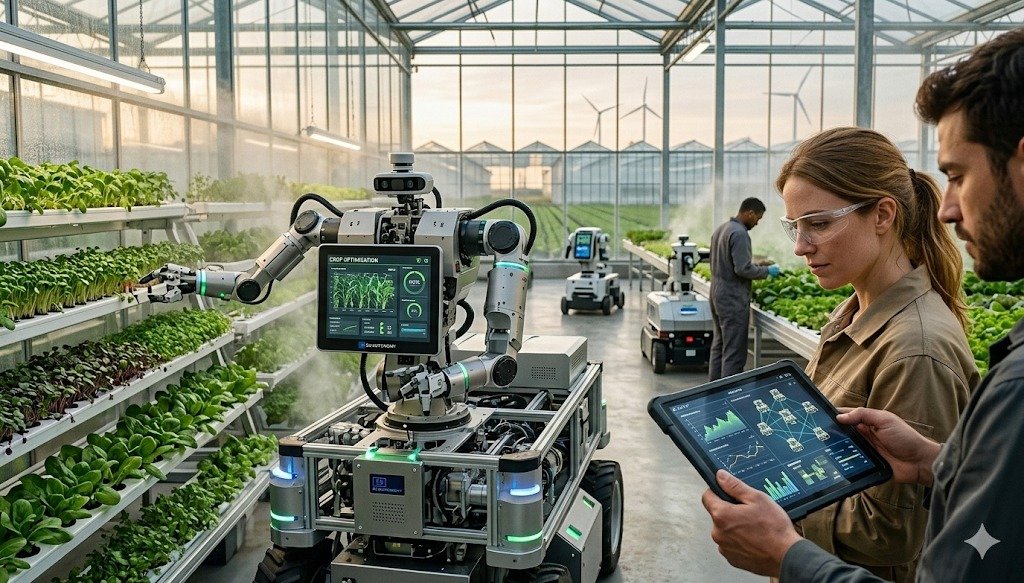
The barrier to entry for smart farming was once the high cost of hardware. In 2026, the “RaaS” model has solved this. Small farmers don’t buy €500,000 robots; they subscribe to them. Companies like AgroBot and Dutch Robotics provide fleets of autonomous weeders and harvesters that operate 24/7, powered by solar energy and guided by ultra-precise GPS.
Precision at Scale
These aren’t just “dumb” machines. They use Vertical AI to identify individual pests on a single leaf, applying a drop of pesticide rather than spraying an entire field. This has allowed European farms to meet the strict “Farm to Fork” chemical reduction targets while increasing their yields.
The New “Agri-Entrepreneur”
The modern farmer is becoming a data scientist. The business opportunity in 2026 isn’t just in the land; it’s in the data generated by these robots. Entrepreneurs are building platforms that turn soil-health data into “Carbon Credits,” allowing farmers to get paid by airlines and tech companies for the carbon their autonomous farms sequester.
Agricultural Autonomy has turned a dying industry into a high-tech frontier, proving that in Europe, the future of business is rooted in the soil.